Meet our vet - Rob


As a lifelong pet owner myself, 
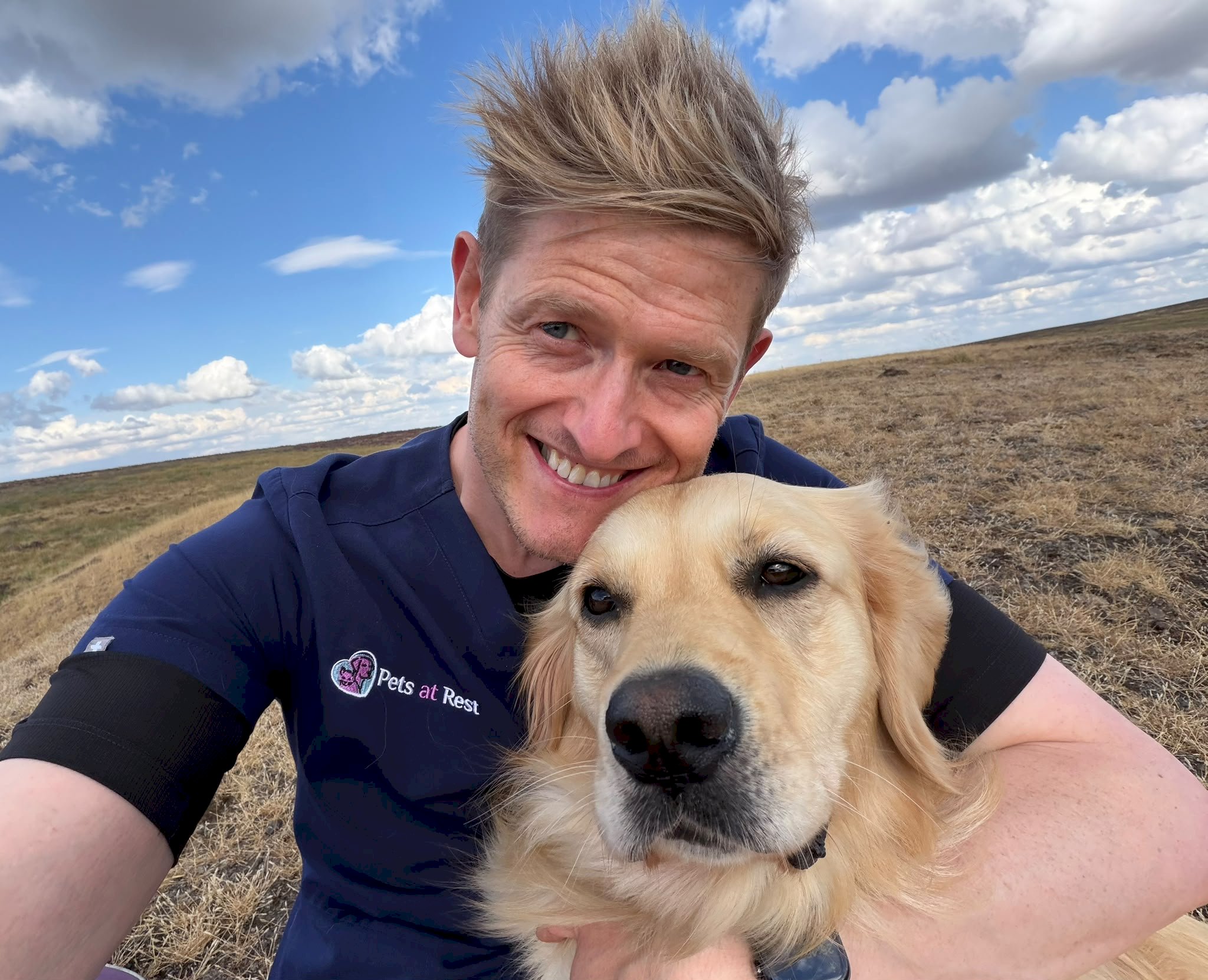
I understand the strong connection you share with your animal companions.I've been lucky to share my home with many dogs and cats over the years, and I currently share it with my adorable Golden Retriever, Lumin.


For over 20 years, I've helped families across Sheffield by making a positive difference to the life of animals. As an experienced and trusted veterinarian, I've been proud to support the South Yorkshire community which included many years leading several branches of the PDSA charity hospital. I now focus a significant portion of my time on offering specialised care to ensure animals experience comfort and dignity in their final moments.

Pets at Rest began in 2018 following my own experience of the comfort and peace of helping cherished companions to pass away at home. Seeing the positive effect this had on both the animals and those close to me, I felt driven to offer other pet owners the opportunity for peaceful farewells within their own familiar surroundings. Being a service I operate directly, you can be assured it will always be me who visits you to provide compassionate home euthanasia.

When the time comes, I will use my expertise in end-of-life care to ensure your pet's final moments are peaceful, dignified and relaxed in the place they call home.

My Google and Facebook reviews reflect the care and support I've provided to thousands of families through this difficult journey. When you get in touch, I'll listen carefully to your needs and help you explore all your options so you can make the decision that feels right for you and your beloved companion.

If you would like to read first-hand accounts of how other families have experienced my service, please visit my Facebook page or my Google page. You can also follow me on Facebook for updates and support.

Frequently asked questions

When is the right time to have my dog or cat put to sleep?

The right time to have your dog or cat put to sleep is typically when their quality of life has declined so much that they are experiencing more pain, discomfort, or distress than enjoyment, and their condition cannot be improved. Each situation is unique, but it is important to remember that animals live in the “here and now,” and sometimes the kindest choice we can make is to gently ease their suffering when comfort and quality of life can no longer be restored.  As a loving pet owner, we know this is the hardest decision you’ll make, so when it comes to end-of-life decisions, it’s important that both you and your pet are well cared for.

To support you in reaching the right decision, it can be useful to ask yourself some questions to determine your pets’ quality of life. You might ask yourself:

  • Are they experiencing ongoing pain that can no longer be managed?
  • Have they stopped eating or drinking?
  • Are they struggling with mobility, severe weakness or old age dementia?
  • Have they lost interest in interaction, play, or daily routines?
  • Are there more bad days than good days?

These questions help you focus on how well your pet is coping and keep their wellbeing at the centre of your decisions.

A quality of life checklist can also be helpful when making this decision. The guidance produced by the PDSA pet charity includes useful questions to help you assess your pet’s comfort and wellbeing.

If your pet is suffering, cannot recover, and no longer enjoys life, choosing to put them to sleep is often the kindest and most compassionate decision you can make. Towards the end of their life, it can be kinder to choose a “compassionate day” — a moment when your pet can pass peacefully, surrounded by care, rather than facing distress or an unexpected emergency.

You don't have to go through this alone

A significant part of our role is providing reassurance to families about their decisions. When you reach out to discuss this with us, Rob will guide you through your options with care and honesty. Occasionally, he is able to offer advice and medication that can give families additional days, weeks, or sometimes months with their pets. However, if your companion needs help sooner, or you require a same-day visit, Rob will always try his best to respond.

Last updated: April 2026

What happens during a home euthanasia visit for my pet?

On the day of your visit, our vet, Rob, will contact you to let you know he is on his way. He will arrive in a small, blue van and will be wearing our branded clothing so you know you are welcoming the right person into your home.

On arrival, Rob will:

  • Introduce themselves calmly and respectfully.
  • Take time to gently settle your pet.
  • Talk through the process before anything begins.
  • Answer any questions you may have.

Everything is carried out with care, allowing you to move at a pace that feels right for you.

The farewell process

When you feel ready, the process takes place in two calm and carefully guided stages:

1. Gentle sedation

Your pet is first given a sedative to help them relax and drift into a deep, peaceful sleep. This is given as a small injection. Occasionally, some pets briefly notice the injection, much like a quick pinch, but this is usually distracted using treats and fuss.

Typically, most pets will fall asleep within 2–10 minutes, although this may be a little shorter or longer depending on their individual biology, age, and overall condition at the time. As it takes effect, you may notice your pet becoming drowsy, their breathing slowing, and their body relaxing. Some pets may seem slightly unsteady as they settle. These are normal effects of sedation.

During this time, you can choose what feels right for you:

  • Spending some quiet time alone together while our vet steps away.
  • Have our vet remain nearby for support.

There is no right or wrong - you are encouraged to use this time in whatever way feels most meaningful for your goodbye.

2. Final anaesthetic

Our vet will check-in with you and ensure your pet is completely asleep and unaware before continuing.

With your consent, a final anaesthetic is then administered. This works quickly and painlessly. Your pet will pass away peacefully, without any awareness or distress.

Last updated: April 2026

Will my pet feel any pain?

No — the euthanasia process is designed to be gentle and pain-free. The word euthanasia comes from Greek, meaning “a good death.” For over 20 years, Rob has supported thousands of animals using a carefully developed veterinary approach that is focused on comfort, dignity, and freedom from distress.

The sedative used before euthanasia works in a very similar way to the medications used to prepare pets for general anaesthesia during surgery. It acts on the brain and central nervous system, helping to reduce anxiety, relax the body, and gradually bring your pet into an unaware state. Depending on their breed and sensitivity, some pets may briefly notice the sedative being given, similar to a quick pinch but the sensation passes very quickly. Many pets do not notice this part at all.

Once the sedative has fully taken effect, many pets reach a level of unconsciousness comparable to being under a general anaesthetic for surgery. At this point, the brain is no longer processing awareness or pain in a meaningful way.

The final anaesthetic is only given once your pet is deeply asleep and unaware.

Last updated: April 2026

Which vets offer at-home euthanasia near me?

We know how important it is to have support that feels close, familiar, and easy to reach when you need it most. We currently provide home visits in and around:
Sheffield
Chesterfield
Barnsley
Rotherham
Wakefield
Doncaster
If you’re based in these areas, we can usually help. If you’re a little further outside of our coverage we may not be able to attend—but we’re happy to point you toward another mobile vet who may be closer to you.
If you are based within these areas, we can usually attend promptly. If you are slightly outside our coverage or we do not have availability, we may not always be able to reach you, but we will try to guide you towards a trusted mobile vet who may be closer.

Last updated: April 2026

How do I get in touch?

Every family is different, and we want you to feel comfortable contacting us in whatever way suits you best. You email, text, Whatsapp or call us. There’s no formal process and even a short message is absolutely fine.

When you get in touch, we’ll look together at your pet’s wellbeing and quality of life. There’s no pressure or expectation—just a calm conversation to help you feel supported in making the decision that’s right for you and your pet.

If you decide to arrange a visit, we’ll simply ask for a few details such as your pet’s name, your address, and a time that works for you. We’ll keep everything as straightforward and unhurried as possible so you can focus on your pet, and I’ll take care of the rest.

Last updated: April 2026

What happens after my pet has passed?

After your pet has passed, Rob will gently confirm that they are at peace.

Most families then choose for Rob to take their pet for cremation. This can be a group cremation, where ashes are respectfully scattered at the crematorium, or an individual cremation, where your pet is cremated on their own and you are reunited with their ashes.

You are also welcome to make your own aftercare arrangements if you prefer.

If you would like keepsakes such as a paw print or fur clippings, these need to be requested before your pet goes for cremation, as they can only be created at that stage. If you are unsure about keepsakes at the time, it is important to let Rob know as soon as possible afterwards so nothing is missed.

Last updated: April 2026

How do I pay?

We understand that this can be an emotional time, and the last thing we want is for payment to feel complicated or stressful.

Most families prefer to arrange payment in advance, as it allows everything on the day to feel calm and focused entirely on your pet and saying goodbye.

We prefer payment by bank transfer where possible, but we also accept card payments or cash if that is easier for you.

Bank details will be provided on request or in your confirmation message when we have booked a visit.

If you are unable to use bank transfer, you can also pay by card or cash when Rob arrives. The card machine does require a good mobile signal, so this can occasionally be affected in some locations.

Above all, we simply want this part to feel easy and settled, so that when I arrive, your time can be fully focused on your pet.

Payment Plans

We do not offer payment plans. However, if you would like to plan ahead, you are very welcome to make instalments in advance of your appointment and we will keep a record of your payments.

For families who may need additional support, we also work with a Pet Gifting programme which contributes £150 towards the cost of the visit when a pet is donated after passing. If you would like to explore this option, more information can be found here Pet Gifting Donation

Last updated: April 2026

Should my other pet be there?

In most homes, other pets can be present during or around the time of euthanasia, and many families find this helps them understand what has happened and come to terms with the loss more gently. Pets often form strong bonds with one another and may already be aware that their companion is unwell, so being allowed to stay nearby can give them a sense of closure rather than confusion or searching afterwards.

Some pets will want to remain close, lying beside their companion or observing quietly, while others may prefer to stay at a distance or be in a separate room, and both responses are completely normal. If a pet becomes unsettled, anxious, or overly focused on the situation, it is also perfectly appropriate to move them away and allow them to return afterwards to say goodbye in their own way. In most cases, even a brief moment of awareness—seeing, sniffing, or simply being in the same space after death—can be enough for them to understand and begin to process the change.

The only time we would advise against another pet being there is if their behaviour is taking away from your experience of a calm and peaceful goodbye.

Read our blog about other pets being present during at-home euthanasia

Last updated: April 2026

About Pets at Rest

Pets at Rest Vets provide compassionate home euthanasia services for families who want their pets to pass peacefully in familiar surroundings.
Your visit will be personally carried out by Rob, an experienced and compassionate vet who specialises in end-of-life care. He is known for taking time with each family, explaining every step clearly, and ensuring the experience is calm, respectful, and unhurried. If you choose to have a cremation, Rob uses soft, clean blankets to wrap your pet in before laying them carefully into comfortable bedding.
The focus of Pets at Rest Vets is to support families through one of the hardest moments of pet ownership with dignity, clarity, and care—making sure pets are surrounded by love in their final moments at home.

Last updated: April 2026